
Why DeepSeek V4
Looks Plain
DeepSeek is easy to misunderstand because it does not behave like the AI company many observers expect it to be. It does not always perform the usual theater of frontier-model competition. It does not turn every release into a product launch, every benchmark into a victory parade, or every technical improvement into a new consumer narrative.
That quietness can make the company look plain. The better reading is different: DeepSeek’s plainness is a strategy. It is trying to make intelligence cheaper, more portable, and less trapped inside one hardware or product story.
DeepSeek remains “simple” compared with many foundation-model companies. That word can sound dismissive in English, but in this context it is closer to austere, restrained, almost stubborn. DeepSeek is not trying to become the loudest AI application company in China. It is trying to keep improving the unit economics of the model layer.
The short answer
Section titled “The short answer”DeepSeek V4 matters because it shows a Chinese model lab optimizing for cost, long context, architecture, inference efficiency, and hardware flexibility rather than only for consumer-facing spectacle.
The key question is not whether V4 is the absolute best model in the world. It probably is not. The question is whether DeepSeek can continue pushing down the cost of useful intelligence while keeping enough frontier capability to pressure closed-model leaders and reshape China’s AI infrastructure stack.
That is why the V4 discussion is bigger than a benchmark table. It is a story about a Chinese AI company whose center of gravity is not app growth, advertising, or enterprise sales. Its center of gravity is system efficiency.
This is also why “plain” should not be read as “small.” Plainness can be a distribution strategy. A model that is cheaper to run, easier to adapt, and less tied to one expensive stack can spread through more products even if it does not own the most glamorous interface. In an AI market where many apps still struggle to turn usage into profit, the cost curve underneath the product can matter as much as the demo above it.
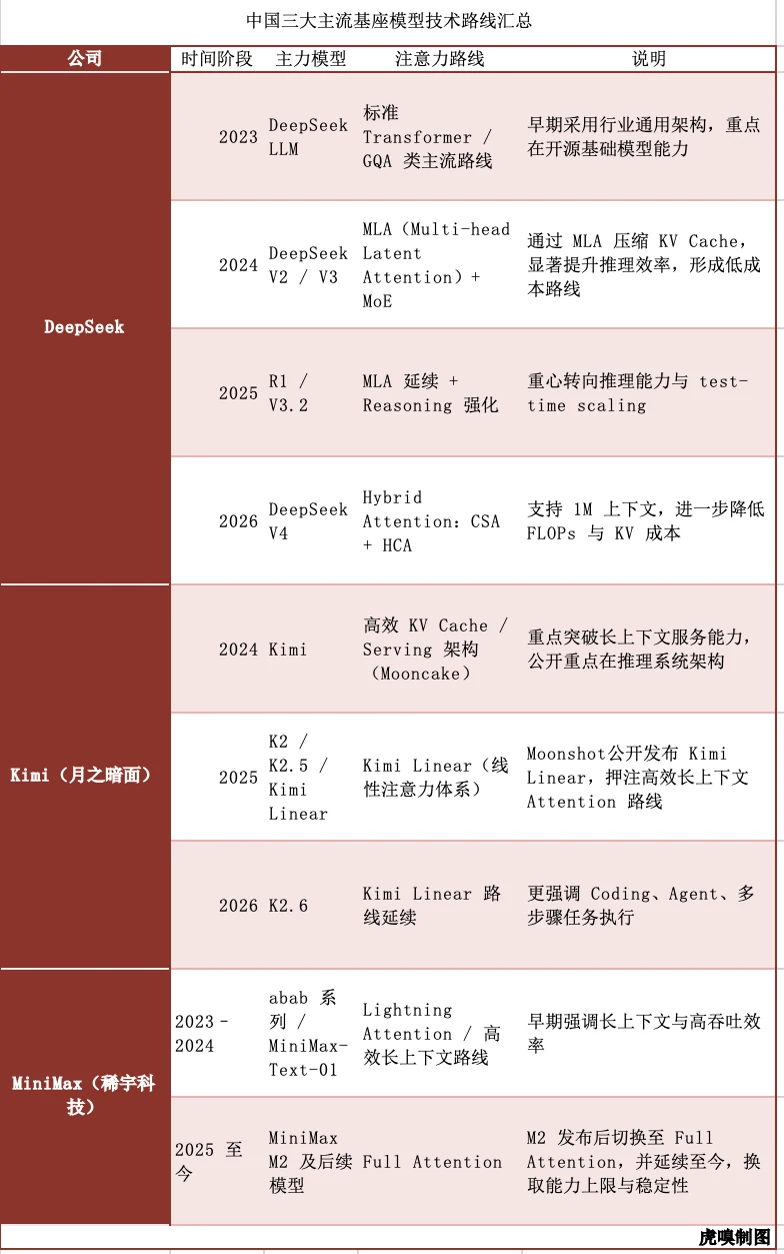
DeepSeek is easiest to understand as an efficiency-centered model company rather than a pure consumer-app challenger.
What “plain” means in DeepSeek’s case
Section titled “What “plain” means in DeepSeek’s case”DeepSeek’s public style is not accidental. The company emerged from High-Flyer, a quantitative trading firm. That heritage matters. Quant culture is obsessed with efficiency, latency, risk, yield, infrastructure, and resource use. A model is not only a product. It is a machine whose cost curve determines what can be built on top of it.
That background helps explain why DeepSeek often seems more interested in unglamorous engineering than in consumer storytelling. Mixture-of-experts routing, attention compression, inference optimization, context-window management, kernel work, and hardware adaptation are not the kind of topics that make a mainstream launch feel dramatic. They are, however, the topics that decide whether large-scale AI becomes cheap enough to spread.
This contrast is clearest when DeepSeek is compared with companies such as Kimi. Kimi, owned by Moonshot AI, is closer to a standard AI startup path: raise capital, grow users, improve model capability, create paid use cases, build agent features, and prove that model progress can become a business. DeepSeek looks less hurried because it is solving a different problem.
The difference is not “technical idealism versus commercial reality.” Both sides have technical ambition. The difference is where each company puts the bottleneck.
| Company posture | Main bottleneck it appears to optimize |
|---|---|
| DeepSeek | Cost per unit of intelligence, architecture efficiency, system portability |
| Kimi / Moonshot AI | User-facing capability, long-context productivity, agent workflows, monetization |
| Consumer AI apps | Retention, willingness to pay, everyday use frequency |
| Enterprise AI providers | Integration, reliability, compliance, account expansion |
DeepSeek’s strategic bet is that the model layer still has huge room for efficiency gains. If that bet is right, the companies that win early user mindshare may still depend on the labs that make inference cheaper.
The bet also changes how we should read DeepSeek’s public behavior. A consumer AI company often needs narrative: new features, emotional use cases, a memorable assistant personality, partnerships, enterprise logos, and proof that users will pay. An infrastructure-oriented model lab can be quieter because its audience includes developers, platforms, researchers, and companies watching cost and capability. For that audience, a release note, model card, benchmark table, or deployment detail can matter more than a launch video.
This does not make DeepSeek immune to business pressure. It only means the pressure appears in a different place. The question is not only “How many users love the app?” It is “How many downstream builders can afford to build on this model, and how many workloads become viable because the cost is lower?”
V4 as an efficiency release
Section titled “V4 as an efficiency release”The V4 discussion highlights several themes: long context, compressed attention, lower inference cost, and cross-platform system work. Public model cards and technical summaries around DeepSeek V4 describe a long-context architecture and hybrid attention mechanisms. The important point is not each acronym by itself. It is the direction of travel.
Long context is expensive when every token forces the model to carry too much history forward. A model that can work over a very large context window without exploding memory and compute cost has practical value for codebases, legal documents, research folders, internal company knowledge, and agent workflows. In other words, long context is not a vanity metric if the cost curve improves with it.
DeepSeek’s V4 discussion also points to a broader shift: model companies are now competing through the architecture of attention, cache, routing, and inference. The frontier is no longer only “train a bigger model.” It is “make a large model behave as if it has more memory, better retrieval over its own context, and lower marginal cost.”
That matters for China because cost is a strategic variable. If Chinese AI companies face tighter access to leading-edge imported chips, the incentive to squeeze more useful work out of each unit of compute becomes stronger. Efficiency is not merely a business preference. It is part of the geopolitical environment.
The practical value of long context is also often overstated in the wrong way. A large window does not automatically mean the model understands everything inside it. The useful question is whether the model can retrieve the right parts, maintain reasoning over long material, avoid being distracted by irrelevant text, and do so at a price that makes repeated use possible.
For China’s AI ecosystem, that matters in boring but important workflows: reading contracts, searching technical manuals, analyzing procurement documents, reviewing codebases, summarizing regulatory files, comparing supplier documents, and running enterprise knowledge assistants. These are not always viral use cases. They are the workloads that decide whether AI moves from demo to operating expense.
The chip story is subtler than “Nvidia replaced”
Section titled “The chip story is subtler than “Nvidia replaced””One of the easiest mistakes in reading Chinese AI is to turn every hardware detail into a binary sovereignty story. Did DeepSeek fully switch from Nvidia to Huawei Ascend? Did it train V4 on domestic chips? Has China solved the chip constraint?
The better answer is more careful. V4 does not prove a complete training-side replacement of Nvidia. Instead, it suggests that DeepSeek is working on cross-platform adaptation and reducing hard dependence on one vendor stack.
That distinction is important. Training frontier models remains much more demanding than serving inference. Pretraining depends on large-scale parallelism, interconnect stability, compiler maturity, fault recovery, and a full software ecosystem. Inference is more distributed and can move earlier to alternative chips, especially when models are optimized for deployment.
So the realistic path is not “one day China trains everything on domestic chips and the problem disappears.” The realistic path is staged substitution: inference first, some workloads next, more portable kernels and intermediate languages, then broader migration if the hardware and software stack matures.
That is why toolchain choices matter. The key contrast is between low-level Nvidia-oriented work, such as PTX-style optimization, and domain-specific languages or abstraction layers that can preserve performance while making code easier to move across hardware. In plain English: DeepSeek may be trying to keep the speed benefits of low-level engineering without being permanently locked to one chip ecosystem.
The hardware story should be read as optionality, not victory. Optionality means a company can choose between vendors, deployment environments, and cost structures with less fear of being trapped. It does not mean every alternative is equally good today. A weaker chip with a stronger software stack may beat a stronger chip that is hard to use for a particular workload. A domestic accelerator may be good enough for some inference tasks before it is good enough for frontier pretraining. A mixed fleet may be more realistic than a clean replacement.
This is why DeepSeek’s efficiency work has industrial significance beyond one model. If model architecture, kernels, serving systems, and quantization improve, more workloads can run on constrained hardware. That makes the entire ecosystem less brittle. The goal is not to make hardware constraints disappear. It is to make them less decisive.
Why this matters for China’s AI race
Section titled “Why this matters for China’s AI race”China’s AI market has two races running at once.
The first race is visible: model rankings, app downloads, consumer chatbots, enterprise pilots, coding demos, and agent products. This is the layer that gets attention because it is easy to see.
The second race is less visible: inference cost, data-center power, domestic chip adaptation, compiler maturity, memory pressure, model compression, routing, and serving reliability. This is the layer that decides whether the visible products can survive at scale.
DeepSeek sits unusually close to the second race. That gives it a different kind of leverage. If it can keep lowering the cost of high-quality inference, it can influence the economics of many downstream applications even without becoming the dominant consumer app itself.
This also explains why DeepSeek can look “behind” in user experience and still be strategically important. A model company does not need to own every interface if it changes the cost base underneath the interface.
The economics of “cheap intelligence”
Section titled “The economics of “cheap intelligence””AI applications often fail because the user value is real but the unit economics are ugly. A feature that costs too much per query cannot be offered freely forever. A coding agent that burns too much inference cost may be useful but difficult to price. A consumer assistant that answers millions of casual questions may create engagement without margin. An enterprise workflow may be promising but impossible if each document review costs too much.
This is where DeepSeek’s strategy matters. Lower cost per unit of useful output can change the product frontier.
| If inference gets cheaper | What becomes easier |
|---|---|
| More context can be included | Workflows need less manual trimming and summarization |
| More attempts can be made | Agents can retry, verify, and compare alternatives |
| More users can be served | Consumer products can experiment with lower prices |
| More local deployments become plausible | Firms with data constraints can consider private or hybrid setups |
| More chips become usable | The ecosystem becomes less dependent on one hardware path |
This is not just a China story. Every AI market faces the same physics of cost, latency, reliability, and willingness to pay. But China’s constraints make the efficiency race more visible. A company that can deliver “good enough frontier” capability at much lower cost can shape adoption even when it is not first in absolute model quality.
Plainness as ecosystem posture
Section titled “Plainness as ecosystem posture”DeepSeek’s restraint also fits a different ecosystem role. A flashy assistant asks users to enter its world. A plain model invites other builders to put it inside their worlds.
That difference matters for distribution. If DeepSeek remains developer-friendly, relatively open in its model releases, and focused on cost, it can become infrastructure for products that look nothing like DeepSeek: coding tools, document agents, industrial software, customer service, search, education, research assistants, and internal enterprise systems.
The risk is that infrastructure can be commoditized. If many model labs push costs down, the margin may move to distribution, data, workflow ownership, or enterprise integration. DeepSeek’s strength could help the whole ecosystem while leaving the company with less direct user power than app-first competitors.
That is not necessarily a failure. Some companies create power by owning the interface. Others create power by making a layer everyone else has to price against. DeepSeek’s plainness suggests it is more comfortable with the second path, at least for now.
What this reading gets right
Section titled “What this reading gets right”This reading is strongest when it resists hype. It does not say DeepSeek has already escaped every hardware constraint. It does not treat V4 as proof that China has closed every frontier gap. It frames DeepSeek as a company choosing a narrower, deeper axis of competition.
That framing is useful because it helps English readers avoid two common errors:
| Common reading | Better reading |
|---|---|
| DeepSeek is quiet, so it is falling behind. | DeepSeek may be optimizing deeper infrastructure variables that are less visible. |
| V4 must be judged only by benchmark rank. | V4 should also be judged by cost, context, serving efficiency, and portability. |
| Domestic chip adaptation means Nvidia is gone. | Adaptation can begin with inference and toolchains before full training substitution. |
| A model lab must become an app company. | A cheaper model layer can shape many app companies without owning the interface. |
It also captures the emotional tone of the DeepSeek debate. AI observers often reward visible drama: spectacular demos, intense rivalry, surprise launches, and founder mythology. DeepSeek is interesting partly because it resists that rhythm. It forces readers to look at less photogenic variables: tokens, memory, routing, latency, hardware utilization, and toolchain portability. Those variables are not glamorous, but they decide who can deploy AI at scale.
Where to be careful
Section titled “Where to be careful”The careful reading is not the pessimistic reading. It is simply more precise.
DeepSeek still operates in a world where frontier training hardware is scarce, where closed models continue moving, and where model quality is not defined only by cost. A cheaper model that fails on reliability, reasoning, tool use, or instruction following will not win serious workflows simply because it is cheap.
There is also a business question. If DeepSeek keeps acting like an infrastructure lab, who captures the application margin? The answer may be “many companies.” It may also mean DeepSeek leaves some value on the table. A low-cost model can become extremely important while still not becoming the company with the strongest consumer relationship.
The most interesting version of DeepSeek, then, is not a Chinese OpenAI clone. It is closer to an efficiency engine inside China’s AI stack.
The other caution is that efficiency can become an excuse for ignoring user experience. Cheaper intelligence still needs useful products. If downstream builders cannot turn lower-cost models into reliable workflows, the efficiency gains remain trapped in infrastructure circles. That is why this article links DeepSeek to What OpenClaw Reveals About AI Products: the model layer lowers the cost of intelligence, but the product layer decides where intelligence becomes work.
DeepSeek’s future importance will depend on both layers. If it keeps improving the cost curve while Chinese product teams learn to build dense, trusted, repeatable AI environments, the effect could be large. If the model improves but product execution remains shallow, the impact will be more limited.
What to watch next
Section titled “What to watch next”- whether DeepSeek’s long-context claims translate into stable real-world coding and document workflows;
- whether inference pricing keeps falling without sacrificing quality;
- whether Huawei Ascend and other Chinese accelerators gain credible production inference workloads;
- whether DeepSeek’s toolchain choices make models easier to serve across hardware;
- whether app companies build visible products on top of DeepSeek rather than only using it for benchmark comparisons;
- whether lower inference cost changes the pricing of Chinese AI products;
- whether model efficiency becomes a bigger macro story through lower data-center cost and wider AI adoption.
Is DeepSeek V4 the best AI model?
Section titled “Is DeepSeek V4 the best AI model?”That is not the most useful question. V4 should be judged not only by top-line benchmark rank but also by cost, context handling, inference efficiency, and deployment flexibility.
Does DeepSeek V4 prove China no longer needs Nvidia?
Section titled “Does DeepSeek V4 prove China no longer needs Nvidia?”No. The stronger claim is narrower: DeepSeek appears to be reducing single-vendor dependence through cross-platform adaptation, especially for serving and inference. Full frontier training substitution is a harder problem.
Why compare DeepSeek with Kimi?
Section titled “Why compare DeepSeek with Kimi?”Both are major Chinese AI labs with strong technical cultures, but their visible bottlenecks differ. DeepSeek looks focused on the model-cost curve; Kimi looks more exposed to user-facing product and monetization pressure.
Why does “plain” matter?
Section titled “Why does “plain” matter?”Because the AI industry often rewards spectacle. DeepSeek’s restraint suggests a different theory of power: make intelligence cheaper and more efficient, and many applications become possible downstream.
Does lower cost matter if a model is not number one?
Section titled “Does lower cost matter if a model is not number one?”Yes, if the quality is high enough for real workflows. Many applications need reliable, affordable intelligence more than the absolute best benchmark score. Cost can decide whether a product can be used every day rather than only demonstrated once.
Is DeepSeek mainly an infrastructure company?
Section titled “Is DeepSeek mainly an infrastructure company?”It is safer to say that its public posture is infrastructure-heavy. DeepSeek can still support applications, but its strategic importance comes from model efficiency, serving economics, and hardware optionality rather than only consumer app growth.
Sources and further reading
Section titled “Sources and further reading”- DeepSeek official model collection on Hugging Face: DeepSeek-V4 collection.
- Hugging Face documentation: DeepSeek-V4 model architecture notes.